Foods High in Fiber: Affordable Guide for Pakistan
Eating well doesn't have to mean a bigger grocery bill. Many of the foods that support good health are already sitting in your kitchen. Dietary fiber, the part of plant foods your body can't fully digest, can support regular digestion and has a place in any balanced diet. Daal, chana, seasonal vegetables, guava and whole wheat flour all contain it. This guide explains which foods high in fiber are worth adding to your plate, how much fiber per day adults generally need, which affordable fiber-rich foods are easy to find, and how to increase your intake comfortably.
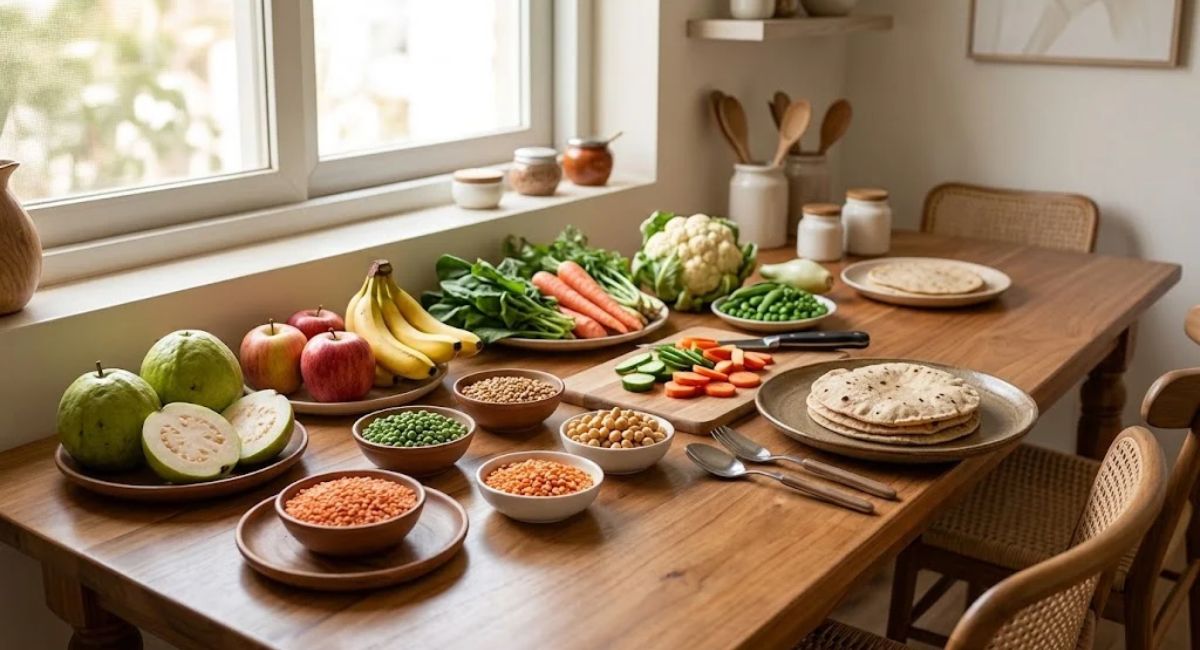
What Is Fiber?
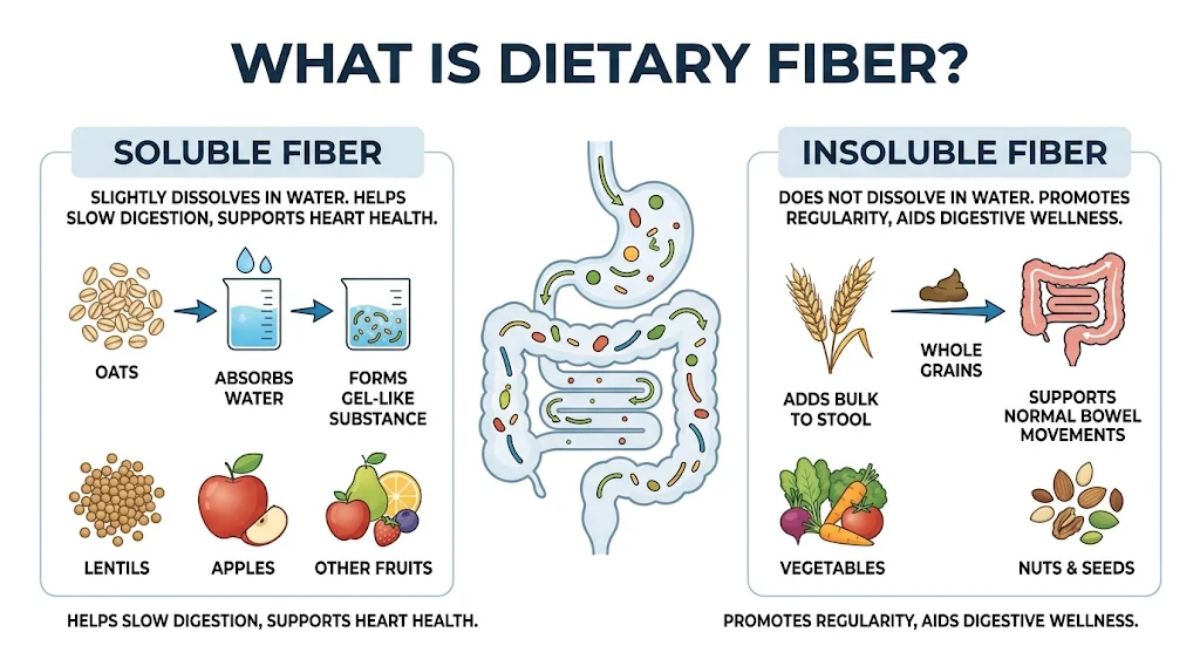
So, what is fiber? Dietary fiber is the part of plant foods, such as legumes, whole grains, fruits and vegetables, that resists digestion in the small intestine. Fibers are often grouped by how they behave in water. Soluble fiber dissolves or swells in water and can form a gel, while insoluble fiber does not dissolve and tends to add bulk. Most plant foods contain both, and individual fibers can behave differently.
How Much Fiber Per Day Do You Actually Need?
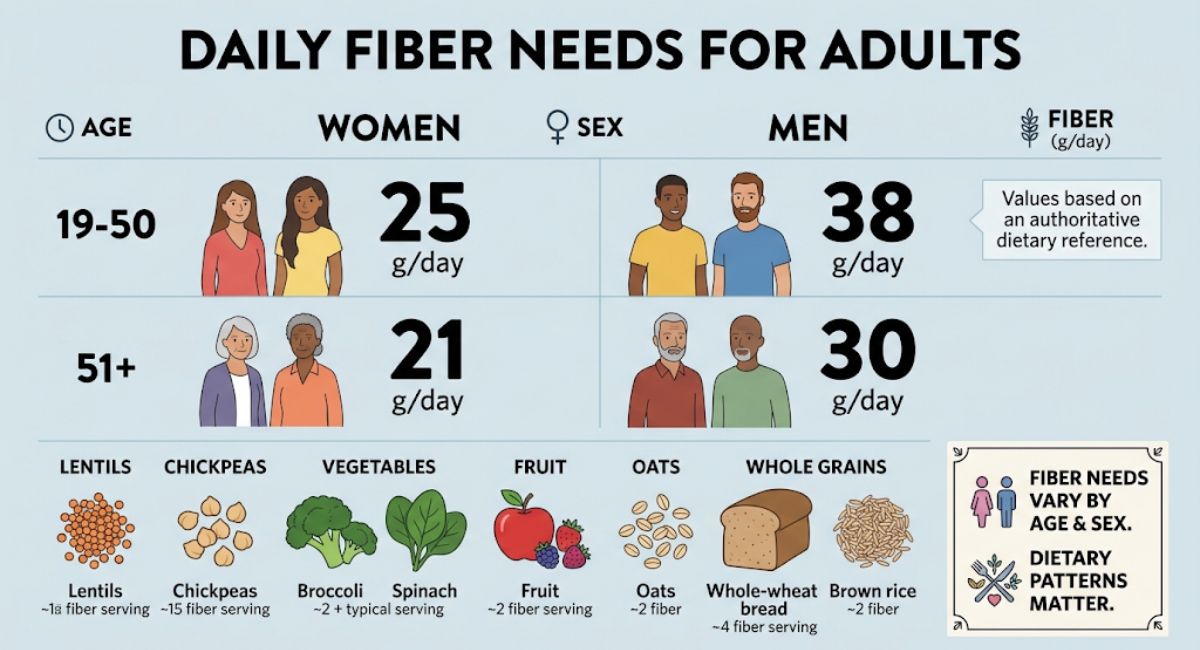
There isn't one answer to how many grams of fiber per day suits every adult. The Adequate Intake is set at 14 grams per 1,000 calories, so daily fiber intake varies with age and sex. For adults aged 19 to 50 it is 25 grams for women and 38 grams for men, and over 50 it is 21 and 30 grams respectively [1].
These are general guidelines for healthy populations, not personal medical advice. Individual fiber needs can differ, especially with a digestive condition or a prescribed diet.
In practice, fiber adds up across the day: oats or daliya at breakfast, daal or chana at lunch, a guava as a snack, and vegetables with dinner.
If you currently eat little fiber, increase it gradually rather than all at once, since a sudden jump can cause gas and bloating. Drink enough fluids as you go, though water alone won't resolve every case of constipation.
Foods High in Fiber: Affordable Options in Pakistan
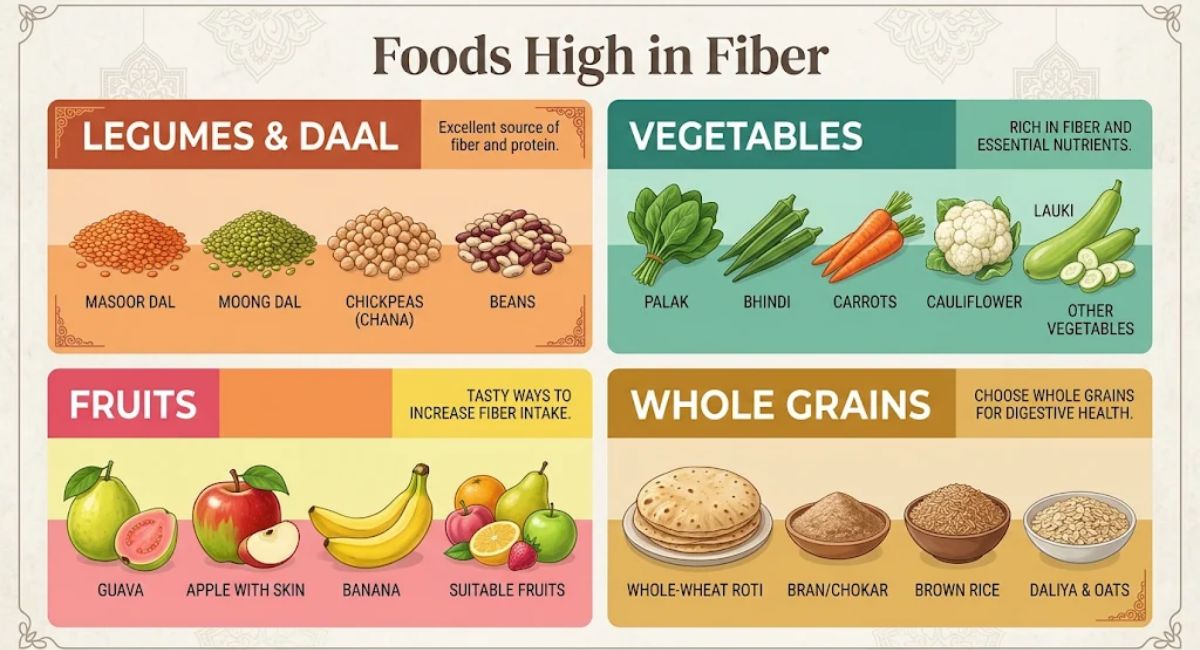
What foods are high in fiber, and which are easy on the budget? Many desi foods high in fiber are everyday kitchen staples. This fiber rich foods list groups them by type. Prices vary by city, season and market, so affordability here means smart buying, not fixed rankings.
Legumes and Daals: The Cheapest Fiber Source
Daals and chana are among the most fiber-dense foods you can cook at home. Boiled lentils provide 7.9 g per 100 g, while moong and chana both provide 7.6 g. They are often a budget-friendly choice because dry legumes can be bought in bulk and stretched across several meals, though prices differ by variety, season and shop [2].
Vegetables High in Fiber
Most vegetables contain fiber, but in modest amounts. Do carrots have fiber? Yes: raw carrots have about 2.8 g per 100 g. Cauliflower (gobi) has 2.5 g, bitter gourd (karela) 2.2 g and plain spinach (palak) 1.7 g, while bhindi and lauki also add fiber and variety. These are useful contributors, but legumes are far richer, so treat vegetables as supporting players [3].
Fruits High in Fiber
Guava stands out with 5.4 g per 100 g raw. Banana provides 2.6 g and apple with skin about 2.4 g, though apple values vary by variety. How much fiber in an apple? A medium apple weighs more than 100 g, so it provides more than 2.4 g, depending on its size. Does watermelon have fiber? A little, about 0.4 g per 100 g, so it hydrates but isn't a meaningful fiber source [3].
Whole Grains and Everyday Fiber Sources
Choose whole grains where you can. Roti made with bran (chokar) keeps more fiber than refined-flour roti, and daliya and oats are also whole-grain options. Dry rolled oats provide roughly 10 g per 100 g, but cooked porridge is mostly water, so a bowl gives far less per 100 g. Does rice have fiber? All rice has some, but brown rice keeps its bran, so it generally has more than polished white rice.
Fiber Rich Foods on a Budget: Smart Shopping Tips
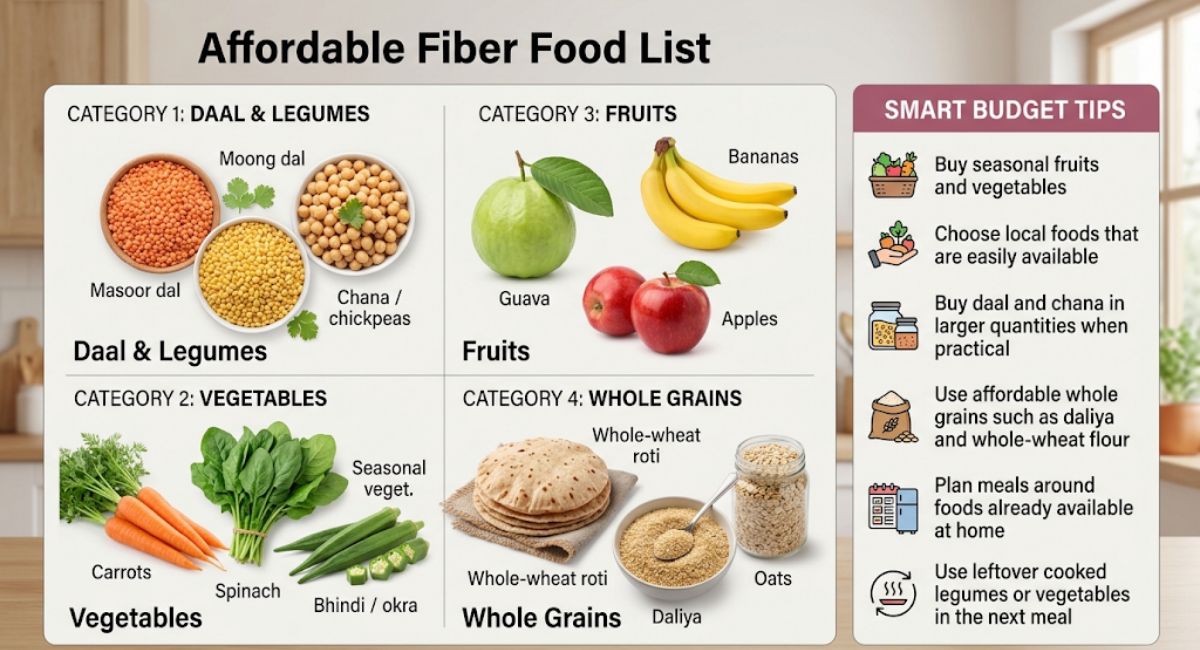
Fiber rich foods on a budget depend more on habits than special products. For a healthy diet on low budget Pakistan households can keep up, these tips focus on method, since prices vary by city, season, market and quality.
- Buy seasonal fruits and vegetables. In-season produce is often better value, and guava, carrots and cauliflower are easy affordable fiber rich foods to add.
- Buy daal and chana in suitable quantities. Dry legumes store well, so buy what your household will realistically use.
- Use what's already in your kitchen. Add chana to a vegetable dish or keep fruit handy before buying anything new.
- Choose affordable whole-grain options. Where practical, use whole wheat flour with its bran or daliya instead of more refined choices.
- Go easy on costly packaged "health foods." Cheap high fiber foods like daal and whole fruit don't need a label to be useful.
Benefits of Fiber for Your Body
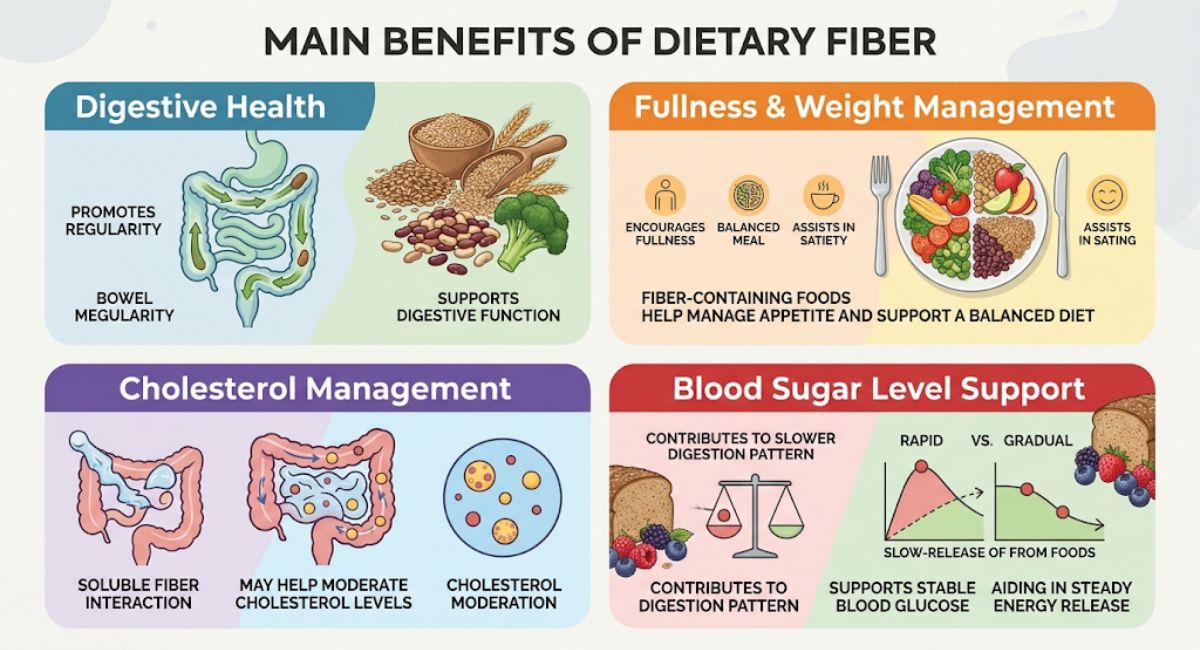
Digestion and bowel regularity. Fiber for digestion works by adding bulk and holding water in stool, which can help keep bowel movements regular and easier to pass. Some fibers are also fermented by gut bacteria, which is why fiber for gut health is an active area of research.
Constipation. Fiber for constipation can help many people, especially alongside enough fluids, but it isn't an automatic fix. If your current intake is low, increase it gradually, and see a doctor if constipation persists.
Cholesterol. Certain soluble fibers, such as the beta-glucan in oats, have evidence supporting a role in helping manage blood cholesterol as part of an overall healthy diet. Not every fiber source has the same effect.
Blood sugar. Fiber-containing foods such as legumes and whole grains are generally digested more slowly than refined foods, which can mean a more gradual rise in blood glucose after a meal. This does not make fiber a treatment for diabetes; anyone managing it should follow their healthcare team's advice.
Weight management. Fiber for weight management is about fullness, not fat loss. Foods like daal, whole fruit and vegetables can help you feel satisfied, which may support a healthy eating pattern. Fiber is not a weight-loss shortcut.
Signs and Symptoms of Fiber Deficiency
Fiber deficiency symptoms aren't a fixed list, and "fiber deficiency" isn't a formal diagnosis. What research describes is that consistently low fiber intake may be associated with certain issues.
- Constipation or less regular bowel movements. Fiber adds bulk to stool, so a long-term low intake may contribute to harder or less frequent stools.
- Less favorable cholesterol levels. Eating patterns low in fiber-rich foods are associated with this, but cholesterol is also shaped by genetics, other dietary factors, lifestyle and health conditions.
These signs have many other causes, such as low fluid intake, medications, stress and medical conditions. Symptoms alone can't show whether your fiber intake is low, and bloating in particular has many possible causes.
If you have persistent symptoms, see a doctor or registered dietitian rather than self-diagnosing.
How to Increase Fiber Intake Naturally
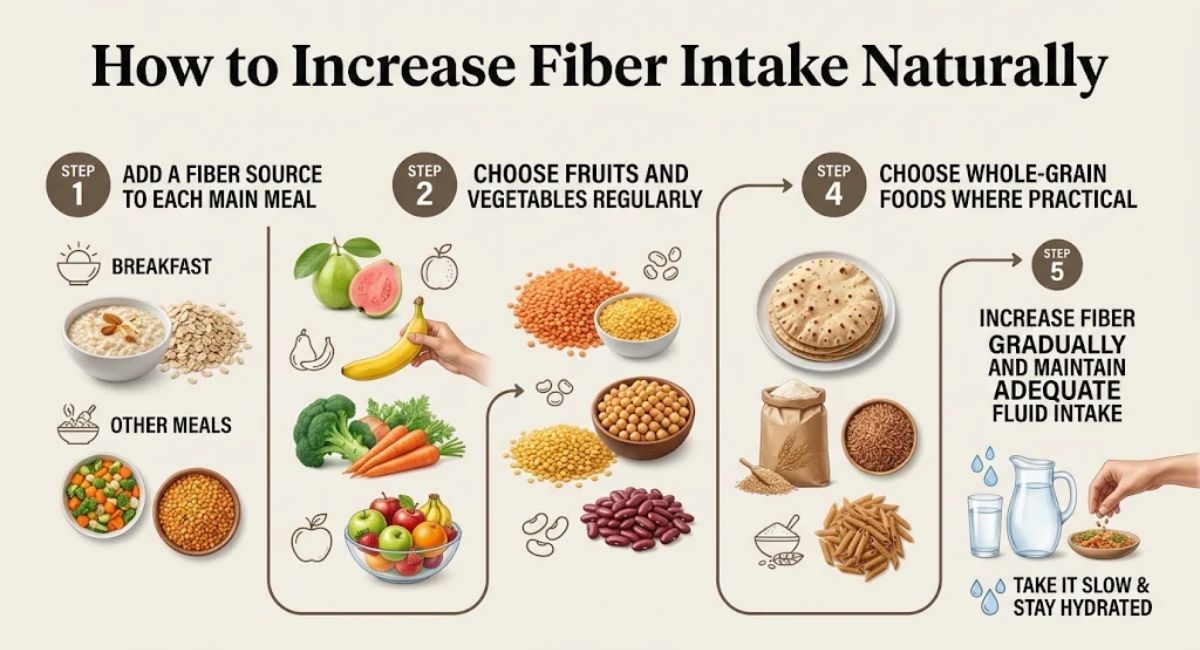
Learning how to increase fiber intake naturally mostly means adding to what you already eat, not overhauling your diet.
- Add a fiber-containing food to each main meal, such as a vegetable, a legume or a whole grain.
- Include legumes regularly. Daal, chana and beans fit easily into lunch or dinner. Soaking dry legumes and cooking them thoroughly is standard preparation, and some people find them easier to digest this way, but it doesn't suit everyone equally.
- Use whole-grain foods where practical, such as whole wheat flour roti or daliya.
- Eat fruits and vegetables regularly. The fiber rich fruits and vegetables list above gives you plenty of ideas. Wash produce well, and eat the skin only when it is edible and suitable, as with an apple. Skins such as banana or melon rind are not meant to be eaten.
- Increase gradually, giving your digestion time to adjust, and drink enough fluids as you go.
For fiber rich breakfast ideas, one affordable example is daliya with a sliced banana. This is an example, not a medically prescribed meal plan.
Conclusion: Making Fiber Part of Your Everyday Diet
Eating more fiber doesn't need special products or a big budget. Foods high in fiber are found in many everyday plant foods, and familiar Pakistani staples such as daal, chana, seasonal vegetables, fruits and whole grains can all be practical choices.
Go gradually so your body can adjust, and drink enough fluids along the way. Small, steady changes are easier to keep up than sudden ones.
A simple place to start: add one fiber-rich food to a meal you already eat regularly, whether that's chana in your sabzi or a guava with your tea.
Frequently Asked Questions About Fiber
Does watermelon have fiber?
Yes, watermelon contains a small amount of dietary fiber, about 0.4 g per 100 g raw. It is mostly water, so it isn't generally among the most fiber-dense fruits. It's still a refreshing, hydrating choice, but for more fiber, guava, apple with skin and banana provide more per 100 g.
Do carrots have fiber?
Yes, carrots provide dietary fiber, about 2.8 g per 100 g raw. That makes them a useful contributor to your daily intake rather than an especially rich source like daal or chana. Add them to salads, sabzi or snacks for variety; cooked carrots will have a different value per 100 g.
Do bananas have fiber?
Yes, bananas provide dietary fiber, about 2.6 g per 100 g of raw fruit. The amount in one banana depends on its size, and ripeness can also change the fiber value. A banana is a simple way to add a little fiber, for example with daliya at breakfast.
How much fiber in an apple?
A medium apple with its skin (about 182 g) provides roughly 4.4 g of fiber, based on about 2.4 g per 100 g for raw apple with skin. The value varies by apple variety, smaller or larger apples will give less or more, and peeling reduces the amount because much of the fiber is in the skin.
Does rice have fiber?
Yes, all rice contains some fiber, but the amount differs. Refined white rice has the bran removed and provides only a little, roughly 0.3–0.4 g per 100 g cooked. Brown rice keeps its bran, so it provides more, roughly 1.6–1.8 g per 100 g cooked. Exact values vary by rice variety.
Does fiber make you poop?
Yes, fiber can help many people poop more regularly. It adds bulk to stool and helps retain water, which can make stools softer and easier to pass. Response varies from person to person, so it isn't guaranteed. Drink enough fluids and raise your intake gradually, since sudden increases can cause gas and discomfort.
References
Reviewed by
Prof. Dr. Amir Jamil
Professor of Biochemistry, University of Agriculture, Faisalabad (UAF) · Retired Dean, Faculty of Sciences
This article was reviewed for scientific accuracy on .