Vitamins and Minerals: Types, Functions, Food Sources
Vitamins and minerals are micronutrients. The body needs them in small amounts for growth, health, and normal function. They don't give energy like carbohydrates, protein, or fat. But they support key jobs such as bone growth, blood formation, and metabolism. The body cannot make most of them in enough amounts, so we must get them from food. In this guide, you will learn about their types, functions, food sources, daily needs, signs of deficiency, and when supplements may help.
What Are Vitamins and Minerals?
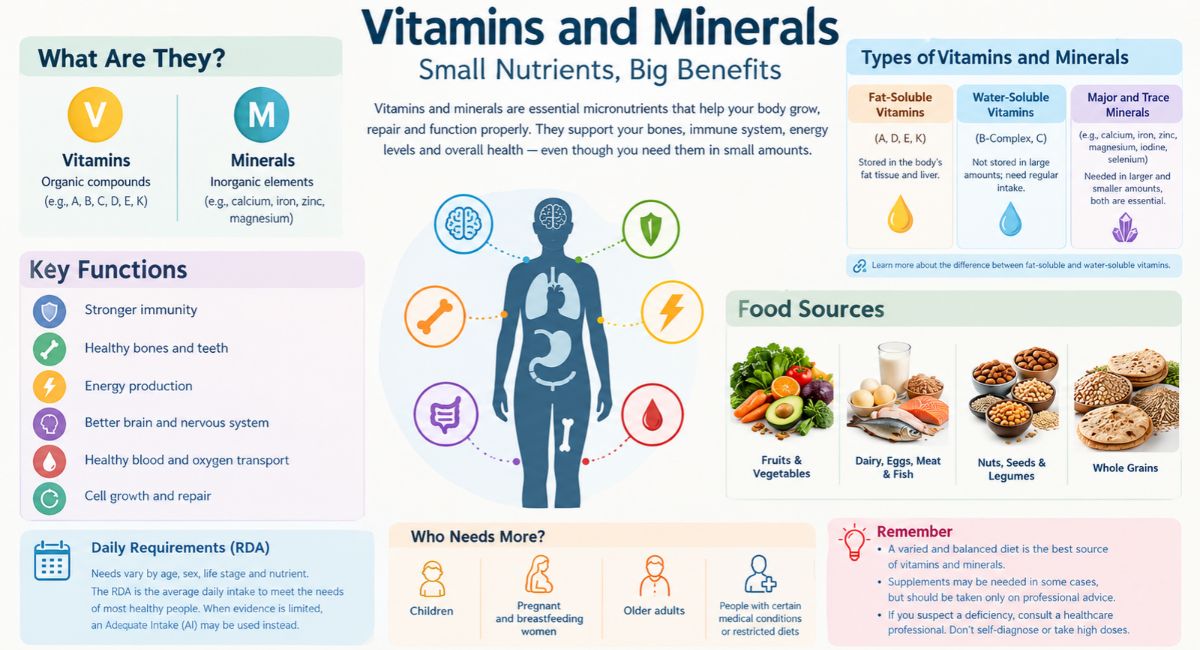
Both are essential nutrients. The body must get them from food to work well. They differ in chemical makeup, and this changes how they act in food and in the body.
Difference Between Vitamins and Minerals
The main difference is chemical. Vitamins are organic compounds made by plants and animals, and they contain carbon. Minerals are inorganic elements. They come from soil and water and enter our diet through plants and animal foods.
This difference affects how we handle food. Heat, light, or air can break down some vitamins, so cooking and storage can lower their levels. Heat does not destroy minerals. But some are lost if you throw away the cooking water.
Their roles differ too. Many vitamins help enzymes drive chemical reactions. Minerals build bones and teeth. They also help balance body fluids and support nerve and muscle activity. Some minerals help enzymes too, so the roles overlap. Later sections explain their functions in detail.
Why the Body Needs Micronutrients
The body needs only small amounts of micronutrients. These are measured in milligrams or micrograms. Protein, carbohydrates, and fat are measured in grams. The amount is small, but these nutrients are essential. Without enough, key body processes cannot work well. Needs change with age. Too much can also be harmful, so some have upper limits.
Types of Vitamins and Minerals
We group vitamins by how they dissolve and minerals by how much the body needs. Vitamins are either fat-soluble or water-soluble. Minerals are major or trace.
Fat-Soluble Vitamins (A, D, E and K)
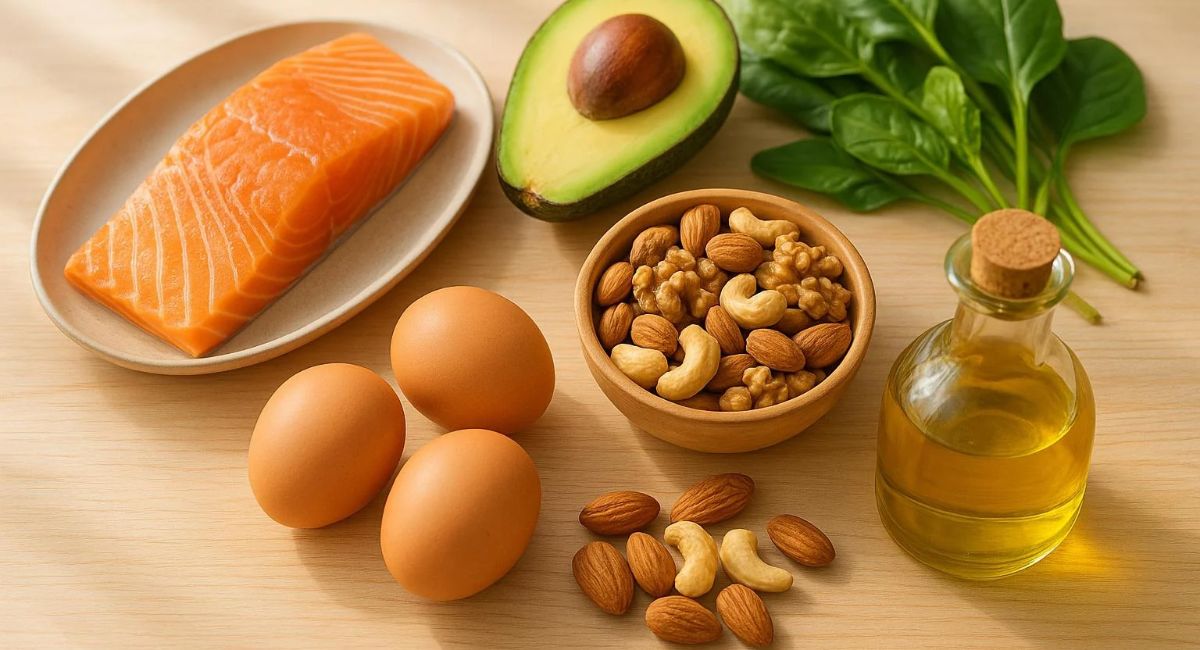
Fat-soluble vitamins dissolve in fat, not water. The body absorbs them in the small intestine along with fat from food. So eating some fat helps you absorb them. They are stored in the liver and body fat, so you do not need them every day. But taking too much, usually from supplements, can cause them to build up. Vitamins A and D have clear upper limits for safety. For a deeper comparison, see our guide on fat-soluble vs water-soluble vitamins.
Water-Soluble Vitamins (B-Complex and Vitamin C)
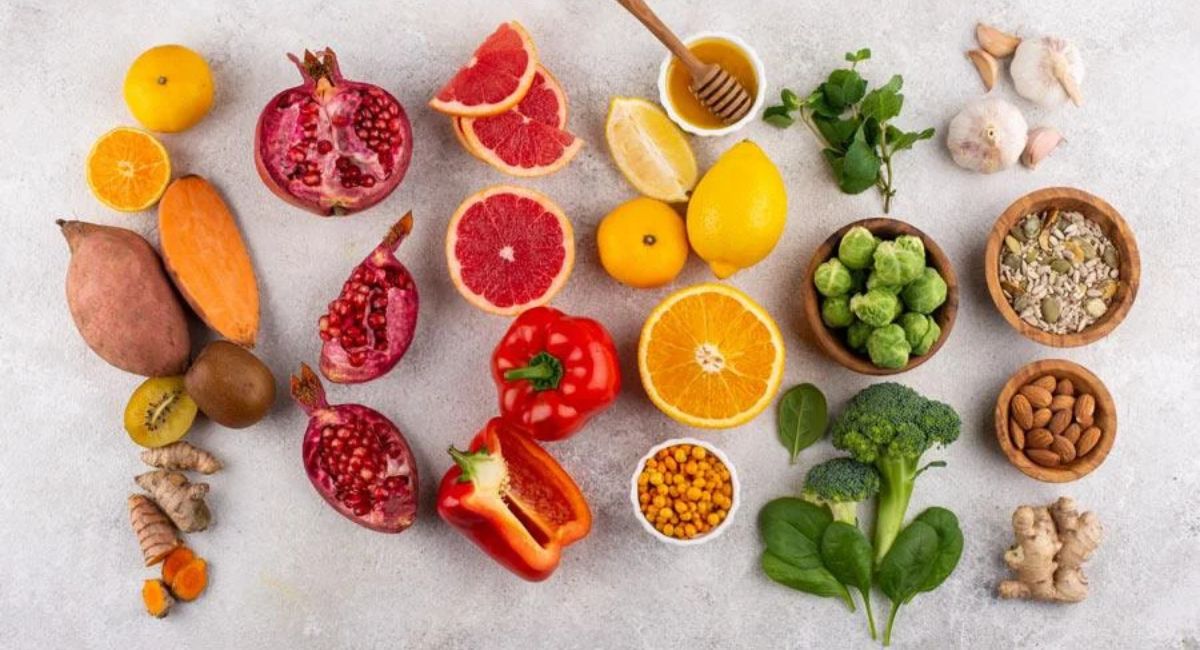
Water-soluble vitamins dissolve in water. This group has vitamin C and the eight B vitamins: B1 (thiamin), B2 (riboflavin), B3 (niacin), B5 (pantothenic acid), B6, B7 (biotin), B9 (folate), and B12. Most are not stored in the body, so you need them regularly. Vitamin B12 is different. The liver can store it for years. Extra amounts usually leave the body in urine, but large supplement doses can still cause problems. Boiling food and throwing away the water can also cause losses.
Major and Trace Minerals
We group minerals by how much the body needs. Major minerals are needed at more than 100 mg per day. They include calcium, phosphorus, magnesium, sodium, potassium, chloride, and sulfur. Trace minerals are needed at less than 100 mg per day. Examples are iron, zinc, iodine, selenium, copper, manganese, fluoride, chromium, and molybdenum.
The terms major and trace describe quantity, not importance. A shortage of a trace mineral such as iron or iodine can harm health as much as a shortage of a major one.
Vitamins and Minerals and Their Functions
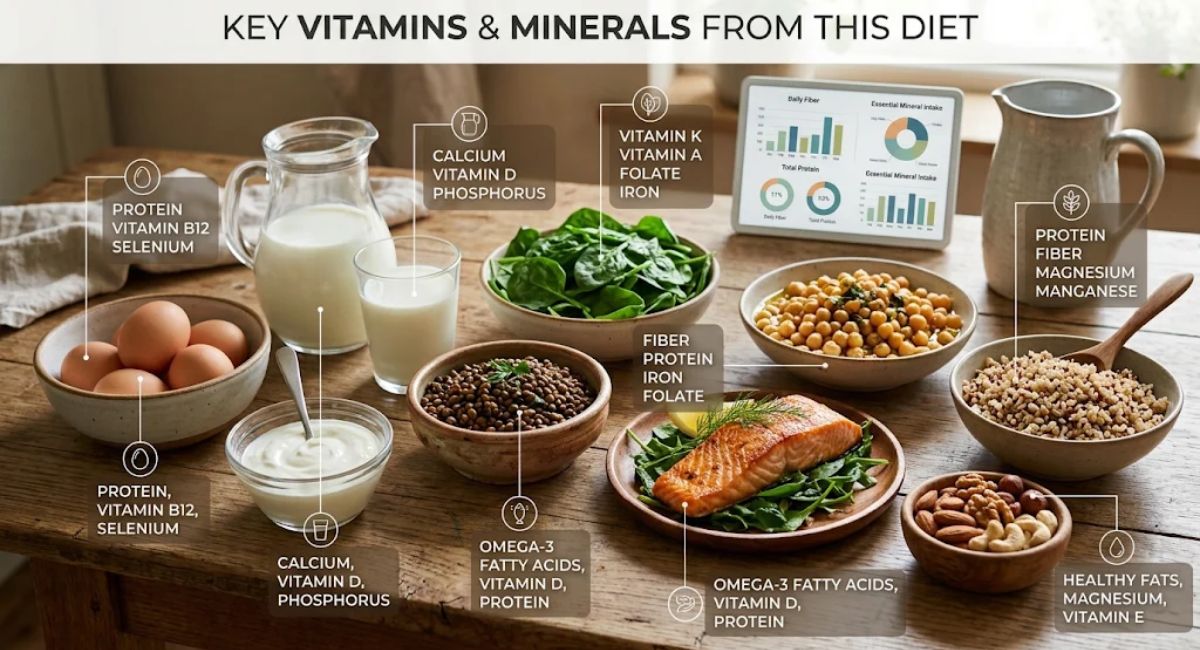
Each essential nutrient has its own job, and many work together. Here are the main functions. Food sources come later.
Functions of Key Vitamins
Vitamin functions fall into a few broad areas. Vitamin A supports vision, especially in low light, and the normal growth of skin and tissues. Vitamin D helps the body absorb calcium and phosphorus, which bones need. Vitamin E is an antioxidant. It protects cell membranes from damage by unstable molecules called free radicals. Vitamin K is needed to make proteins for blood clotting and bone health.
Vitamin C is needed to make collagen, a protein found in skin, tendons, and blood vessels. It is also an antioxidant. It helps the body absorb non-heme iron, the form in plant foods. B-complex vitamins help enzymes release energy from food. They do not supply energy themselves. Some have extra roles. Folate and vitamin B12 are needed for DNA synthesis and red blood cell formation. Folate also matters before and during early pregnancy, for the normal growth of the baby's neural tube.
Functions of Key Minerals
Mineral functions are more varied. Calcium is the main building material of bones and teeth. It is also needed for muscle contraction and nerve signals. Iron is part of hemoglobin, the protein in red blood cells that carries oxygen. Zinc supports many enzymes, protein synthesis, wound healing, and growth. Iodine is part of thyroid hormones, which control metabolism. Magnesium takes part in hundreds of enzyme reactions and supports muscles and nerves. Potassium helps control fluid balance, nerve signals, and muscle contraction, including the heartbeat. Selenium is part of proteins that protect cells from damage and help process thyroid hormones.
| Nutrient | Main Function | Food Sources |
|---|---|---|
| Vitamin A | Vision, normal growth of skin and tissues | Liver, eggs, milk; carrots, mango and spinach (as beta-carotene) |
| B-complex (B1, B2, B3, B6) | Release of energy from food, normal metabolism | Whole wheat atta, dal, eggs, milk, meat |
| Folate and B12 | DNA synthesis, red blood cell formation | Folate: dal, leafy greens. B12: meat, fish, eggs, milk (animal foods only) |
| Vitamin C | Collagen formation, antioxidant, better iron absorption | Guava, citrus fruits, amla, tomatoes, capsicum |
| Vitamin D | Calcium absorption, bone health | Sunlight exposure, egg yolk, oily fish, fortified foods |
| Vitamin E | Antioxidant protection of cell membranes | Nuts, seeds, vegetable oils |
| Vitamin K | Blood clotting | Spinach, mustard greens (sarson), fenugreek (methi) |
| Calcium | Bones, teeth, muscle and nerve function | Milk, yogurt, cheese, small fish eaten with bones |
| Iron | Oxygen transport in hemoglobin | Liver, red meat, lentils, chickpeas, spinach |
| Zinc | Enzymes, wound healing, growth | Meat, chickpeas, pumpkin seeds, whole grains |
| Iodine | Thyroid hormone production | Iodized salt, fish, milk, eggs |
| Magnesium | Enzyme reactions, muscle and nerve function | Nuts, seeds, legumes, whole grains |
| Potassium | Fluid balance, nerve signals, muscle contraction | Bananas, potatoes, lentils, yogurt |
| Selenium | Antioxidant enzymes, thyroid hormone metabolism | Fish, eggs, meat, whole grains |
Food Sources of Vitamins and Minerals
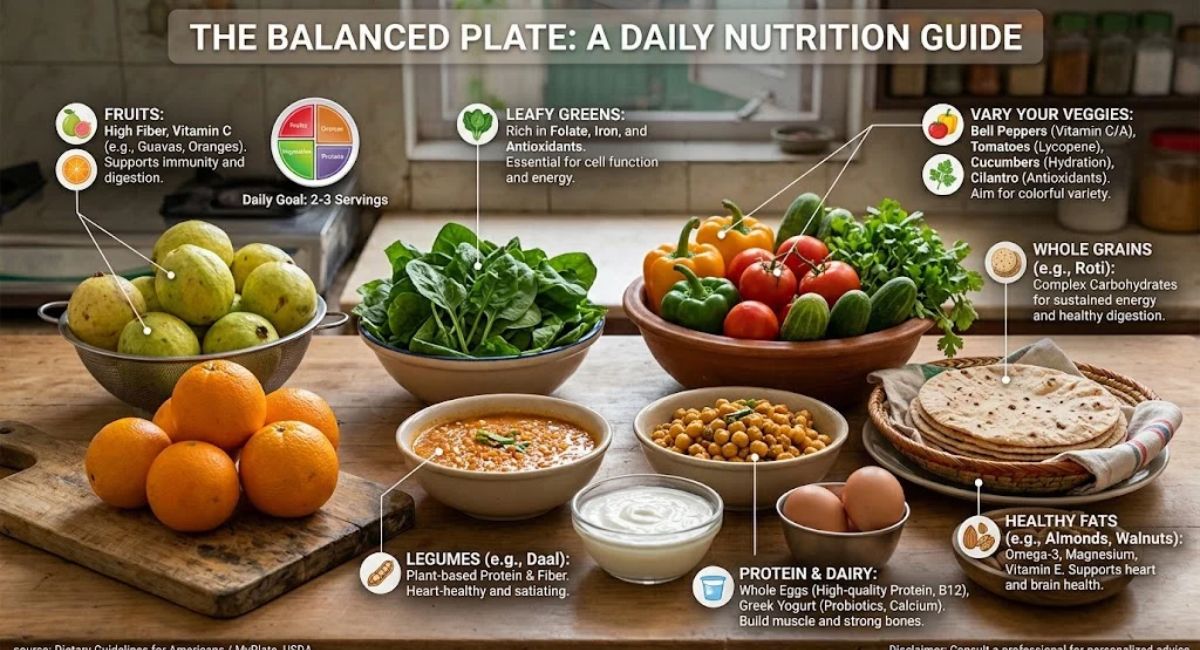
Every food group has some of them, but no single food gives you everything. Eating a variety of foods is the best way to get enough. The amount in food can change with the type, soil, cooking method, and fortification. The examples below are general guides.
Fruits and Vegetables
Fruits and vegetables are rich in vitamin C, folate, and potassium. Guava, citrus fruits, tomatoes and capsicum are good sources of vitamin C. Carrots, pumpkin and mango give beta-carotene, which the body turns into vitamin A. Leafy greens such as spinach, mustard greens and fenugreek supply folate and vitamin K. Heat and water can destroy vitamin C and folate, so light cooking helps keep them. Many of these foods are also good fiber sources, as covered in our guide to foods high in fiber.
Dairy, Eggs, Meat and Fish
Animal foods are rich in minerals and are the main natural sources of vitamin B12. Milk and yogurt give calcium. Eggs, meat and fish give B12, and meat and fish also supply zinc. Red meat and liver have heme iron, which the body absorbs more easily than iron from plants. Fish adds iodine and selenium. Oily fish and egg yolks have some vitamin D. Small fish eaten with their soft bones also give calcium. These foods are also among Pakistan's main protein-rich foods.
Nuts, Seeds and Legumes
Lentils, chickpeas, and beans give folate, iron, zinc, and magnesium. They contain phytates, which can lower iron and zinc absorption. Soaking and sprouting can help. Eating them with vitamin C foods like lemon or tomato helps the body absorb more iron. Nuts and seeds such as peanuts, sunflower seeds, and pumpkin seeds give vitamin E, potassium, and magnesium. They are high in energy, so a small handful is enough.
Vitamin and Mineral-Rich Foods in Pakistan
Affordable healthy foods in Pakistan can meet many needs without costly products. Whole wheat atta rotis keep more B vitamins and magnesium than refined flour. Eat dal, chana or lobia several times a week. Seasonal produce such as winter guava, citrus fruits and leafy greens (saag, palak, methi) is usually cheaper and fresher. Eggs, milk, yogurt or lassi add protein, calcium and B12 at low cost.
Two habits can help you get more from your food. First, tea with meals can lower iron absorption from plant foods. Wait about an hour after eating before you drink tea. Second, some wheat flour, cooking oil, ghee, and salt are fortified, like iodized salt. Check labels to see what nutrients your staples provide.
Daily Requirements: RDA of Vitamins and Minerals
Daily intake values come from the Dietary Reference Intakes (DRIs). The U.S. National Academies of Sciences, Engineering, and Medicine set them. The NIH Office of Dietary Supplements (ODS) publishes them. The RDA is the average daily intake that meets the needs of nearly all (97-98%) healthy people in an age and sex group. When evidence is too limited for an RDA, an Adequate Intake (AI) is given as a best estimate. A Tolerable Upper Intake Level (UL) is the highest daily intake unlikely to cause harm (NIH ODS). These values guide groups. They are not personal prescriptions.
Recommended Intake for Adults
Daily nutrient needs vary by nutrient, age, sex, and life stage. This table shows RDAs for healthy, non-pregnant adults aged 19-50 only.
| Nutrient | Men (19-50 y) | Women (19-50 y) |
|---|---|---|
| Vitamin A | 900 mcg RAE | 700 mcg RAE |
| Vitamin C | 90 mg | 75 mg |
| Vitamin D | 15 mcg (600 IU) | 15 mcg (600 IU) |
| Vitamin B12 | 2.4 mcg | 2.4 mcg |
| Folate | 400 mcg DFE | 400 mcg DFE |
| Calcium | 1,000 mg | 1,000 mg |
| Iron | 8 mg | 18 mg |
| Zinc | 11 mg | 8 mg |
| Iodine | 150 mcg | 150 mcg |
| Selenium | 55 mcg | 55 mcg |
| Potassium (AI, not RDA) | 3,400 mg | 2,600 mg |
Sources: NIH ODS fact sheets for each nutrient; potassium values from the National Academies' 2019 update.
RAE (retinol activity equivalents) and DFE (dietary folate equivalents) are units that show how well the body uses different forms of vitamin A and folate. The higher iron figure for women reflects blood loss in menstruation. After age 50, the iron RDA for women falls to 8 mg, while calcium rises to 1,200 mg.
Needs During Pregnancy, Childhood and Older Age
Some needs rise during pregnancy. For ages 19-50, the iron RDA goes from 18 mg to 27 mg. Folate goes from 400 to 600 mcg DFE, and iodine from 150 to 220 mcg. Calcium stays at 1,000 mg (NIH ODS). A doctor or midwife should guide supplements in pregnancy.
Children need smaller amounts that change as they grow. The calcium RDA is 700 mg for ages 1-3, 1,000 mg for ages 4-8, and 1,300 mg for ages 9-18. Iron is 7 mg for ages 1-3, 10 mg for ages 4-8, and 8 mg for 9-13 (NIH ODS).
In older age, the calcium RDA is 1,200 mg for women over 50 and men over 70. The vitamin D RDA rises to 20 mcg (800 IU) after age 70. The B12 RDA stays at 2.4 mcg. But absorption from food can fall with age. So NIH advises adults over 50 to get most of it from fortified foods or supplements.
Your needs also depend on your health and any medicines you take. A doctor or dietitian can tell you what is right for you.
Vitamin and Mineral Deficiency Symptoms
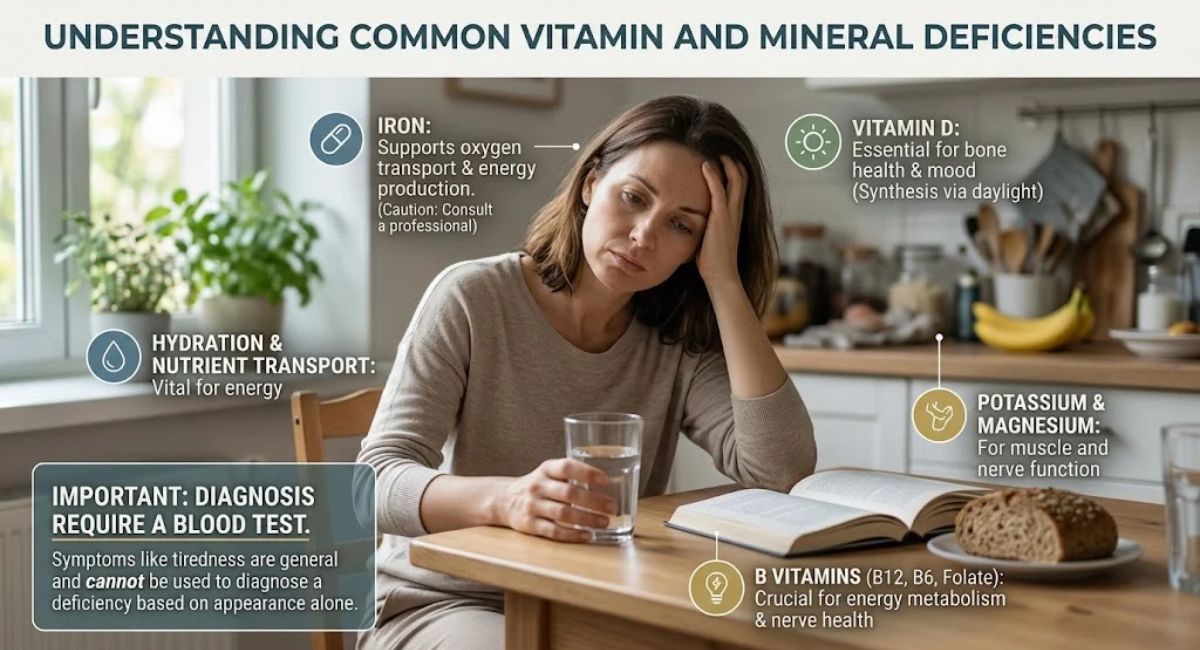
A deficiency happens when the body does not get or absorb enough of a nutrient over time. It usually develops slowly. Symptoms may not show until later.
Common Signs of Deficiency
Deficiency symptoms can include tiredness, weakness, pale skin, mouth sores, brittle nails, hair loss, or tingling in the hands and feet. These signs are not specific. Other problems, such as poor sleep, stress, or infections, can cause them too. Some signs are more specific. One is poor night vision in severe vitamin A deficiency. Another is an enlarged thyroid (goiter) in long-term iodine deficiency. Even then, a doctor should check and confirm the cause.
Who Is at Higher Risk?
Risk depends on diet, absorption, life stage and health. Belonging to a group does not mean a person is deficient. According to NIH Office of Dietary Supplements fact sheets, higher risk can come with:
- very restricted or low-variety diets, or vegan diets without reliable vitamin B12 sources.
- conditions that affect absorption, such as celiac disease or inflammatory bowel disease, and some stomach or bowel surgeries.
- long-term use of certain medicines, such as metformin or acid-reducing drugs, which can lower vitamin B12 absorption.
Pregnancy, breastfeeding, and infancy can raise needs. So can heavy periods and older age. Very little sun exposure can also matter.
Blood Tests for Vitamin and Mineral Deficiencies
No single test covers every nutrient. Depending on your symptoms, diet, and history, a doctor may order a complete blood count, ferritin (for iron), or tests for vitamin B12, folate, or vitamin D. Do not start supplements or guess doses on your own. This can be unsafe and may hide the real problem. If symptoms continue, talk to a doctor.
Can You Get Enough Vitamins and Minerals From Food Alone?
For most healthy people, a varied diet gives enough. Food also has fiber, protein, and other helpful nutrients that supplements lack. But everyone is different, and sometimes food alone isn't enough.
Supplements May Be Needed
Supplements can be right in some situations, usually on professional advice. NIH Office of Dietary Supplements (ODS) gives examples such as:
- folic acid before and during early pregnancy, and other nutrients in pregnancy when an antenatal provider advises them.
- vitamin B12 for people who eat no animal foods, and sometimes for adults over 50 whose absorption from food may be lower.
- vitamin D for people with very limited sun exposure, or for infants, where a pediatrician advises it.
- a confirmed deficiency, or a medical condition or surgery that affects absorption.
Supplements fill gaps. They do not replace a balanced diet. If you need one, a doctor or dietitian should choose the type and amount after reviewing your diet and, if needed, blood tests.
Risks of Taking Too Much (Vitamin Overdose)
Overdose is uncommon from food. It mostly comes from high-dose supplements or fortified products. The risk depends on the vitamin type. Fat-soluble vitamins are stored in body fat and the liver, so they can build up. Too much preformed vitamin A can harm the liver and bones, and the baby in pregnancy. Too much vitamin D can raise blood calcium to harmful levels (NIH ODS).
The body mostly passes water-soluble vitamins in urine, but that doesn't make any dose safe. Long-term high doses of vitamin B6 can damage nerves. Large doses of niacin can cause flushing and liver problems.
Minerals have limits too. Too much iron can upset the stomach. In large amounts it can cause serious poisoning, especially in young children. High zinc intake can block copper absorption. Calcium supplements can cause constipation and, in some people, kidney stones. Some supplements also interact with medicines, such as vitamin K with warfarin. Upper limits exist because too much can be harmful.
Before starting any supplement, tell your doctor what you already take.
Conclusion
Vitamins and minerals are needed in small amounts but are essential for growth and health. Each has a special role, and no single food gives all of them. So the best way to meet your daily needs is a balanced diet with variety: fruits, vegetables, whole grains, legumes, dairy, eggs, fish or meat, and nuts.
Everyone's needs differ by age, sex, pregnancy, and health. If you think you have a deficiency, talk to a doctor or dietitian. Do not self-diagnose or take high-dose supplements on your own.
Frequently Asked Questions
What are vitamins and minerals?
Vitamins and minerals are micronutrients. The body needs them in small amounts for growth, normal function, and health. Vitamins are organic compounds, while minerals are inorganic elements. The body cannot make most of them in enough amounts, so we get them mainly from food (NIH Office of Dietary Supplements).
What is the difference between vitamins and minerals?
Vitamins are organic compounds made by plants and animals. Heat, light, or air can break some of them down. Minerals are inorganic elements from soil and water, and heat does not destroy them. Vitamins often help enzymes work. Minerals often build tissues such as bones and help balance fluids.
What essential vitamins and minerals does the body need?
Essential vitamins include A, C, D, E, K and the B-complex group. Key minerals include calcium, iron, zinc, iodine, magnesium, potassium and selenium. Each has specific roles. Needs vary with age, sex, and life stage, so recommended intakes differ from person to person.
How many vitamins and minerals are there?
The body needs 13 recognized vitamins. Four are fat-soluble (A, D, E and K). Nine are water-soluble (vitamin C and eight B vitamins). The number of essential minerals depends on how they are classed. This guide lists seven major and nine trace minerals. Other sources may group them slightly differently (NIH ODS; FAO/WHO).
How can I get all vitamins and minerals in a day?
No single meal or food gives every nutrient. Aim for variety across the day and week: fruits, vegetables, whole grains, dal or chickpeas, milk or yogurt, eggs, fish or meat, and nuts. A doctor or dietitian can advise if you have special needs.
How do I know if I have a vitamin deficiency?
Symptoms such as fatigue or weakness are not specific and can have many causes. So symptoms alone cannot confirm a deficiency. A healthcare professional can review your diet and medical history and order blood tests if needed. Avoid self-diagnosing or starting supplements without advice.
References
- National Institutes of Health, Office of Dietary Supplements. Dietary Supplement Fact Sheets.
- National Academies of Sciences, Engineering, and Medicine. Dietary Reference Intakes (DRIs).
- World Health Organization. Micronutrients.
Reviewed by
Prof. Dr. Amir Jamil
Professor of Biochemistry, University of Agriculture, Faisalabad (UAF) · Retired Dean, Faculty of Sciences
This article was reviewed for scientific accuracy on .